
Update: Empowering Girls at Masongola Secondary School: Breaking Barriers Through Menstrual Health and Hygiene

Building on the success of the initial phase of the Masongola Secondary School Alumni Association (MASSAA) Project at Masongola Secondary School. Recent activities have focused on deepening knowledge, strengthening peer support systems, and engaging the wider community in promoting menstrual and sexual reproductive health (SRH).
Delivering Essential SRH Knowledge
A key milestone was the delivery of a comprehensive SRH training session for students, held on 27th February 2026 at Masongola Secondary School. Two qualified health professionals from Matawale Health Centre and Zomba Central Hospital hosted the session, with 250 girls and boys participating. The training covered essential topics such as safe menstrual hygiene practices, the prevention and transmission of STIs and HIV/AIDS, personal hygiene, and responsible sexual behaviour.
The session was very interactive and created a safe space for students to ask questions. This approach not only helped improve their understanding but also allowed the students to seek accurate information and make informed decisions about their health.
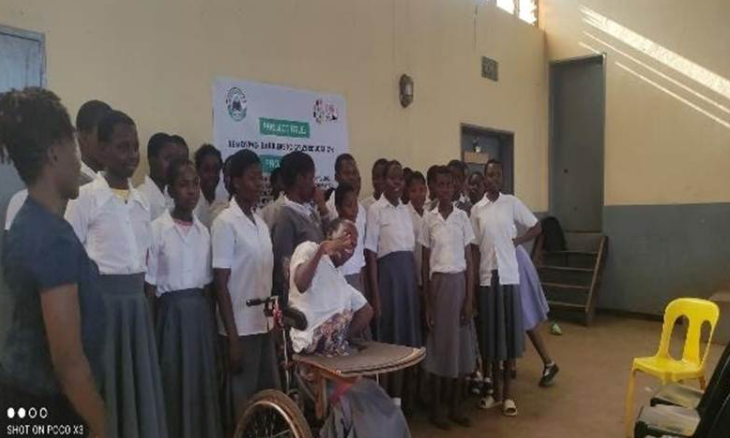
Mentoring and Supporting Girls
The MASSAA project has also included mentoring sessions for 300 girls, focusing on their right to education and access to SRH services, building confidence and resilience among participants. These sessions, conducted in February and March will continue as an ongoing activity. They have provided a platform for girls to openly discuss the challenges they face both at school and at home.
Expanding the Student Ambassador Programme On 16th February, an important development in this phase of the project was the expansion of the student ambassador programme. While initially designed for 10 girls, it was decided that a larger group of 51 ambassadors, comprising both girls and boys would be more effective for overcoming stigma, discrimination and taboos.
The students, 23 boys and 28 girls, were trained as ambassadors in menstrual health management as well as SRH to further educate their fellow students. The ambassadors have also been sharing their knowledge and mentoring students from neighbouring schools.
To support their work, the group has developed a constitution to guide its governance structure, ensuring sustainability and accountability.
Engaging the Wider Community
Community engagement has been another cornerstone of the project. The MASSAA project has held two awareness campaigns, in February and March of this year.
At these events, aimed at promoting girls education, parents, local leaders, and religious leaders were lobbied to allow girls access to sexual reproductive health services alongside removing the taboos on menstrual health and hygiene services.
The campaigns raised awareness among children and parents on the consequences of child marriages, denying girls access to sexual reproductive health services and how to handle cases of sexual abuse.

Empowering Mothers with Skills and Knowledge
Ten mothers from the school’s Parent-Teacher Association were trained on 7th March to better support girls during menstruation. The training went beyond awareness, equipping participants with practical tailoring skills to produce reusable sanitary pads.
With the provision of two sewing machines and start-up materials on 27th March, these women are now able to contribute directly to sustainable menstrual health solutions within the school.
Early Progress and Looking Ahead
While the project is still in its early stages, progress has been highly encouraging. More activities have been implemented than originally planned during this reporting period, demonstrating strong momentum.
Students are already taking an active role in disseminating SRH and menstrual health messages, both within the school and in the wider community. School management committees are mobilising local participation, and health service providers are increasingly engaging with learners by offering guidance and counselling.
These early achievements highlight the strong foundation being built at Masongola Secondary School. By combining education, peer leadership, community involvement, and practical skills development, the MASSAA Project is creating lasting change, ensuring that young individuals are supported, informed, and empowered to stay in school and thrive.
We will continue updating our readers on our projects throughout this year on this website, however, there are other ways to also stay updated through our social media such as Instagram, Facebook, LinkedIn and X or join our monthly newsletter.
Thank you so much for reading! Any donation, big or small, would be incredibly helpful and very gratefully received!
Written by Ed Craik


Comments